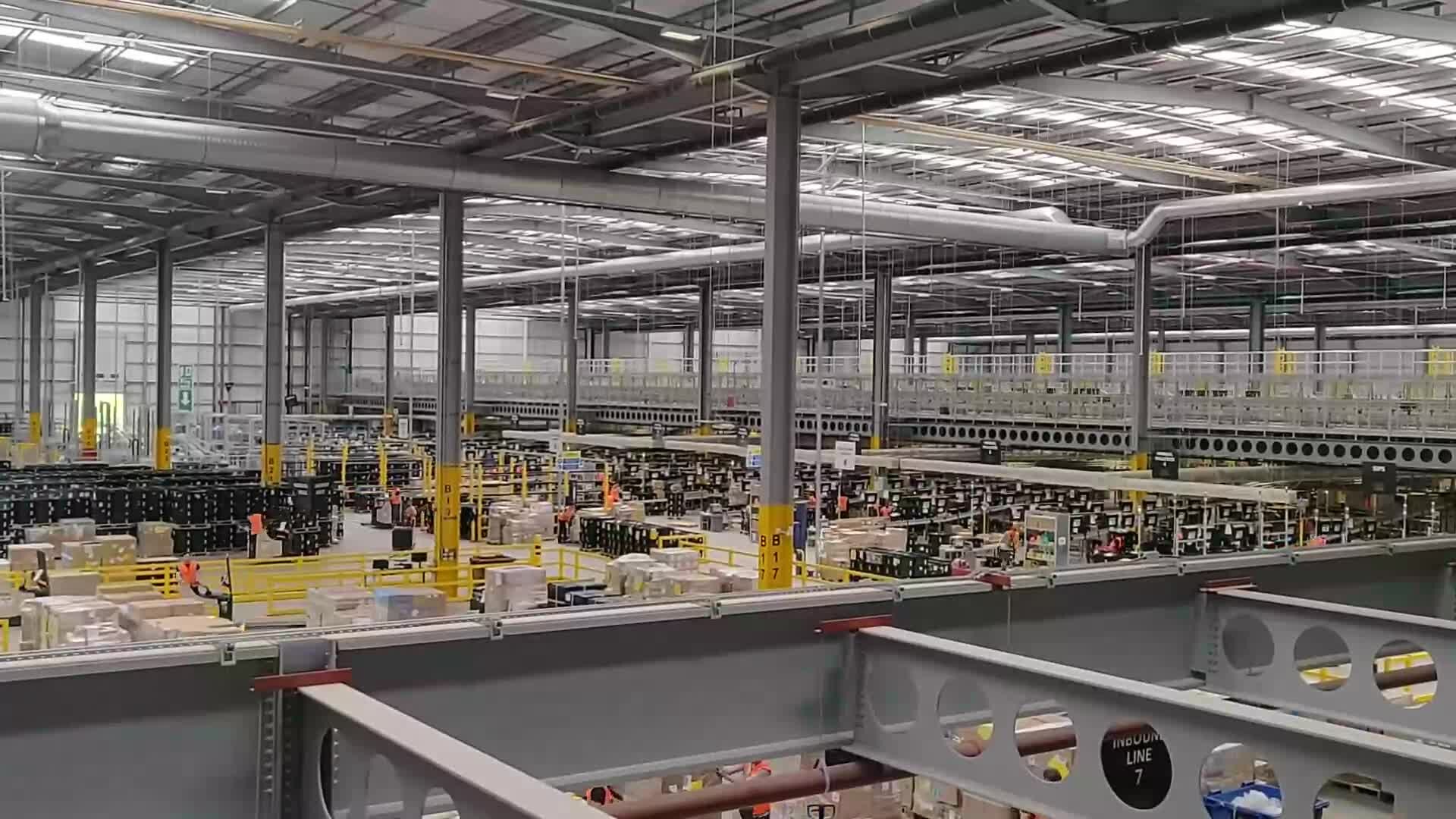
Warehousing and storage employment in the United States surpassed 1.8 million workers before accounting for couriers and last-mile drivers — a sector that barely registered in national labor debates two decades ago. E-commerce volume, pandemic delivery expectations, and near-shoring of supply chains fueled warehouse construction across the Inland Empire, Dallas-Fort Worth, Atlanta, and Central Pennsylvania. Now automation investment threatens to redefine which tasks remain human-performed.
The current labor model
Most fulfillment centers still rely on human pickers walking twelve to fifteen miles per shift, scanning items into totes guided by handheld or wearable devices. Algorithmic management sets pace expectations, monitors time-off-task intervals, and generates productivity scores that influence shift assignments. Turnover often exceeds 100 percent annually at high-volume sites — a churn rate that paradoxically slows automation ROI calculations because training costs remain constant.
Wages rose sharply between 2020 and 2024 as employers competed for bodies in tight labor markets. Starting hourly rates in major markets reached $20 to $22 with signing bonuses; by 2026 growth moderated but remained above pre-pandemic baselines in most metros.
Automation technologies deploying now
Autonomous mobile robots transport shelves to stationary pickers, reducing walking distance. Robotic arms sort parcels into delivery routes. Computer vision systems count inventory without manual cycle counts. Fully dark warehouses — requiring minimal human presence — remain rare due to capital cost and SKU complexity, but hybrid models expand each budget cycle.
"Automation in logistics rarely eliminates entire facilities — it reallocates human effort toward exceptions, maintenance, and oversight."
Geographic concentration
Logistics clusters follow freeway intersections, airport proximity, and tax incentive packages. Riverside and San Bernardino counties host the nation's densest fulfillment footprint; Lehigh Valley in Pennsylvania rivals for East Coast distribution. Rural communities court warehouse projects for property tax revenue, sometimes accepting truck traffic and wage floors that do not transform broader local economies.
Organizing and safety pressures
Warehouse injury rates exceed national averages for private industry — musculoskeletal disorders from repetitive lifting dominate OSHA logs. Heat illness in non-climate-controlled buildings prompted regulatory attention in several states. Union campaigns at major employers brought national scrutiny to termination practices and productivity quotas, even where elections did not produce certified units.
Workforce implications through 2030
Analysts project net warehouse employment may plateau as automation density rises, but maintenance technicians, robotics supervisors, and last-mile drivers will likely grow. Workers seeking stability in the sector increasingly pursue forklift certifications, hazardous materials credentials, and cross-training into transportation roles that automation cannot easily replicate on residential streets.
What local economies should expect
Communities betting economic development on fulfillment centers should model tax revenue against infrastructure wear, emergency services load, and wage structures that may not support homeownership nearby. The sector's labor story is not only about robots replacing pickers — it is about whether logistics work becomes skilled, safer, and sustainable or remains high-churn physical labor managed by algorithmic stopwatches.
Warehouse labor sits at the intersection of e-commerce growth, automation investment, and organizing pressure — making it one of the most consequential blue-collar workforce stories in the United States today.