Union membership in the United States reached roughly 14.3 million workers in 2025, according to Bureau of Labor Statistics releases — yet the share of wage and salary workers belonging to a union fell to about 10 percent, among the lowest levels since comparable records began. The headline decline masks a more complicated picture: traditional manufacturing unions continue to shrink while new organizing campaigns gain traction in warehouses, coffee shops, museums, and digital media companies.
The long arc of declining density
At mid-century, more than one in three American workers carried a union card. Deindustrialization, right-to-work legislation in Sun Belt states, employer opposition to organizing drives, and global trade patterns all contributed to the steady erosion of density over five decades. Private-sector membership now sits near 6 percent nationally, while public-sector unions — teachers, transit workers, municipal employees — maintain membership rates above 33 percent despite legal challenges in several states.
Economists debate how much of the wage stagnation experienced by non-college workers since the 1970s can be attributed to declining bargaining power versus automation, trade, and changing firm structures. What is less disputed: unionized workers consistently earn higher median wages and are more likely to have employer-sponsored health coverage and defined-benefit retirement plans than their non-union counterparts in comparable roles.
Where unions remain strongest
Geography still shapes membership. New York, Hawaii, Washington, and several Midwestern states report union density above 15 percent. Southern states — Texas, South Carolina, Virginia — often fall below 5 percent, reflecting both legal environments that limit mandatory dues collection and industrial compositions weighted toward non-union employers. Alaska and Hawaii are outliers within their respective regions, sustained by maritime, public-sector, and hospitality workforces with deep organizing histories.
"Density alone does not measure influence — a strategically placed union in logistics or healthcare can reshape compensation benchmarks across an entire metro economy."
New fronts in organizing
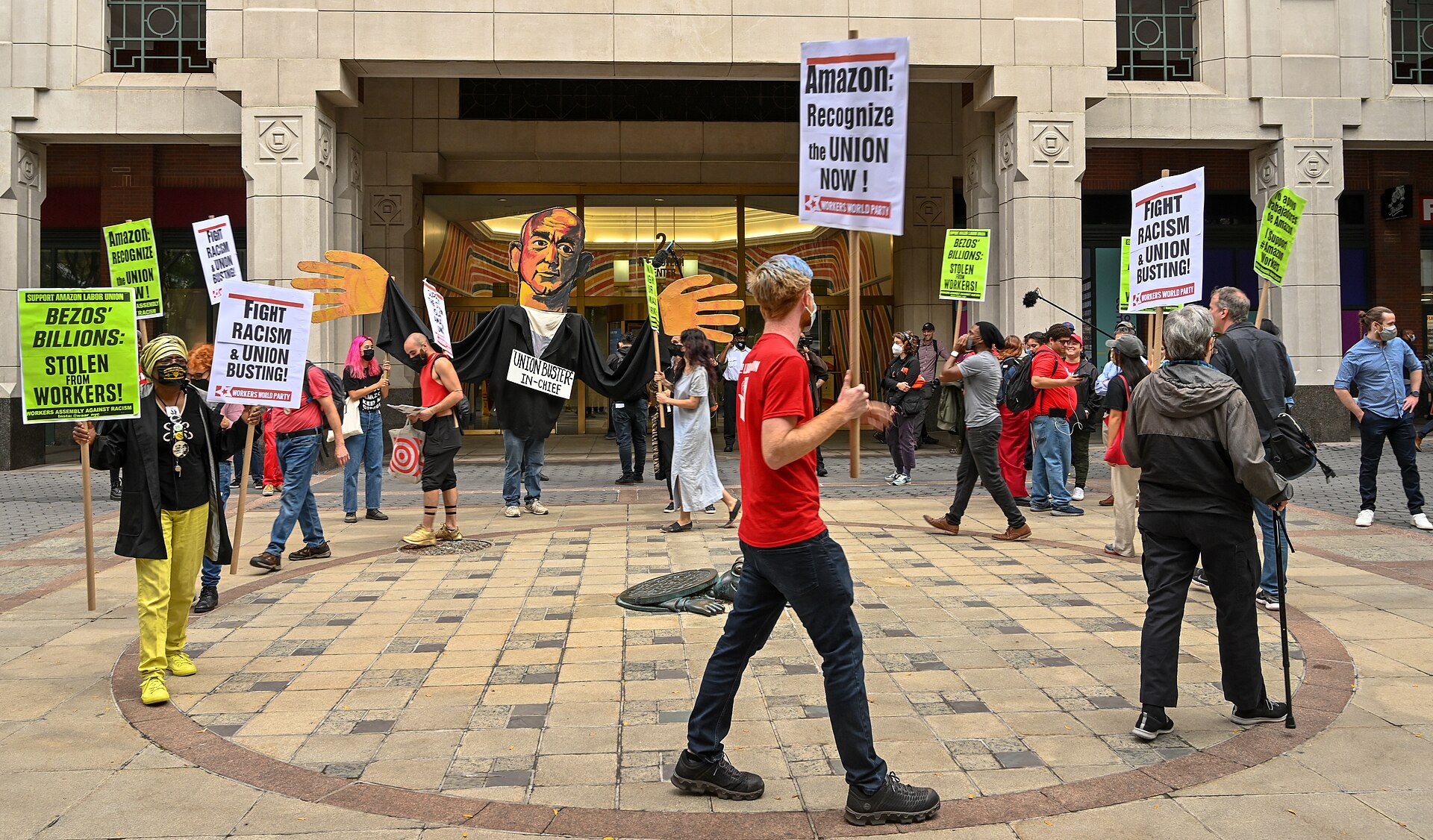
Post-2020 organizing activity concentrated in sectors previously considered resistant to union campaigns. Warehouse and fulfillment centers became focal points as e-commerce employment surged. National Labor Relations Board election petitions rose sharply between 2021 and 2025, with younger workers often leading shop-floor committees through social media coordination and cross-site solidarity networks.
Employer responses vary. Some firms have adopted neutrality agreements or card-check processes; others have invested heavily in captive-audience meetings, consultant-led counter-campaigns, and litigation over unit definitions. The legal timeline from petition to certified bargaining unit often stretches twelve to eighteen months — a window during which turnover can dilute support.
Policy crosscurrents in 2026
Federal rule changes governing joint-employer liability, independent contractor classification, and the timing of union elections remain contested between administrations and courts. State preemption battles — particularly around local minimum wage laws and scheduling ordinances — frequently intersect with union legislative agendas. For workers evaluating whether collective action fits their workplace, the practical question is less about national percentages and more about sector-specific precedent, coworker cohesion, and the stability of the employer's local footprint.
What analysts watch next
Researchers track whether first-contract success rates improve in newly organized shops, whether artificial intelligence deployment in logistics triggers new bargaining demands, and how multi-location employers harmonize — or fragment — compensation across union and non-union facilities. The next decade may not restore twentieth-century density, but it could redefine which industries treat organized labor as a permanent feature of American work life.
Union membership nationally is at historic lows, yet organizing momentum in logistics, retail, and digital media suggests the American labor movement is reorganizing around new economic centers rather than disappearing.